FocusScan RX II


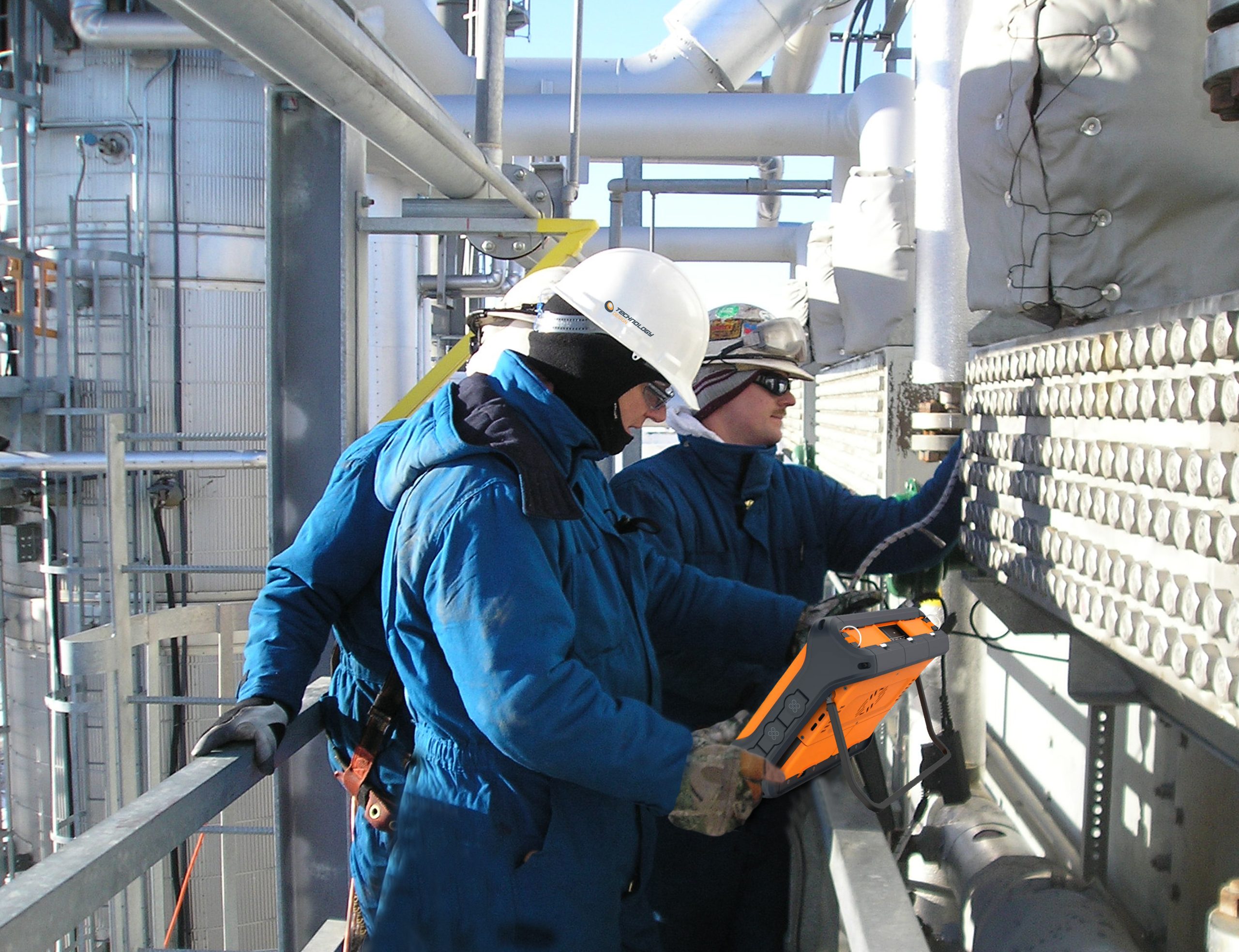
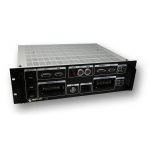
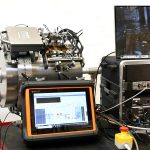
A powerful, feature-rich advanced acquisition solution engineered to meet the rigorous demands of ultrasonic inspections. Designed to deliver precise, reliable assessments the FocusScan RX II accurately identifies and evaluates critical defects to ensure asset integrity. With advanced phased array capabilities, including effective Total Focusing Method (TFM), and innovative Phase Coherence Imaging (PCI), this powerful unit can detect and interpret even the most challenging flaws.
Unmatched Features for Advanced Ultrasonic Inspection
The FocusScan RX II sets a new industry standard with unmatched key features as standard including two 64-element IPEX connectors and eight UT connectors with dedicated electronics for each; Integrated two-axis motor drive control; Positional encoding; 12” wide-aspect touchscreen; Bandwidth .25 – 25 MHz; Complete software suite included.
A Complete Solution: FSRX II and TD Scan Software
The FSRX II includes TD Scan, our fully integrated software suite that brings Full Matrix Capture (FMC), TFM, PWI, PCI, Phased Array, TOFD, and Pulse echo capabilities to your inspection workflow. Highly configurable controls bring real-time encoded, multi-channel TFM into your inspection plans allowing inspectors to identify damage earlier and evaluate the severity of cracks, other flaws, and corrosion to protect welds, components, and assets.
ESBeamTool® is also included as standard, providing operators of all levels with the confidence to apply the full range of powerful detection and analysis techniques.
For over 20 years, TD’s dedicated design and development team has continued to innovate, ensuring the established Focus-Scan product line remains a trusted acquisition solution for NDT professionals worldwide.
| Features | Benefits |
| Dual 64-Element IPEX Connectors | Maximises connectivity and data capture. |
| Eight UT Connectors | Supports versatile inspection setups tailored to complex and diverse inspection requirements. |
| Dedicated electronics for Phased Array and Conventional Channels | UT channels are not “borrowed” from PA, allowing each technique to independently deliver superior quality and results. |
| Integrated Two-Axis Motor Drive Control | Simplifies inspection set-ups and reduces costs by eliminating the need for an external motor control system. |
| 12” Wide-Aspect Touchscreen | A larger than average screen to display critical inspection data, allowing users to interact intuitively with controls. |
| Wide Bandwidth Range (0.25 – 25 MHz) | Adapts to a wide range of material thicknesses and supports an extensive range of inspection applications. |
| Voltage up to 190v for Phased Array and UT | Ensures excellent penetrating power for testing thick or highly attenuative materials. |
| Digitisation frequency up to 100MHz for PA and Pulse-Echo | Delivers greater defect resolution. |
| Digitisation frequency up to 200 MHz for TOFD | Enhances the ability to inspect thinner materials and improve resolution when combined with high-frequency probes. |
| Integration with Eclipse Scientific BeamTool® | Streamlines inspection workflows by importing setups and overlays directly from BeamTool® files. |
| Open Architecture Software Structure | Enables 100% user configurability, unlocking the full potential of the system, for customised solutions and enhanced system capabilities. |
| Automation Integration | Supports interaction with third-party software and systems, enhancing accessibility to data and electronics. |
| Up to 64/128PR Phased Array | Superior focusing capability for thicker materials. |
| FMC / TFM / PWI / VS / PCI | Maintains scan speeds comparable to traditional phased arrays while improving performance. PCI reduces sensitivity to probe orientation and detects smaller defects effectively. |
| 2D Matrix, Dual Matrix and Dual Linear Array support | Produces enhanced imaging quality for focused scans and welds in dissimilar materials. |
| Simultaneous PA, ToFD and PE Acquisition | Boosts productivity by reducing inspection time through concurrent data acquisition. |
| Multi-Channel / Group Data Acquisition | Further enhances productivity by allowing simultaneous data collection across multiple channels or groups. |
| 2 Axis Encoding and Video Tracking | Enables area scans with ease and Video tracking facilitates non-mechanical X/Y scanning. |
| 128GB SSD Storage | Offers convenient high-capacity storage for inspection data, eliminating the need for external storage devices. |
| Positional Encoding | Ensures accurate, repeatable measurements for reliable results. |
| Powerful Analysis and Reporting Functions (Integrated with TDScan Software) | Eliminates the need for additional analysis software, streamlining workflows with integrated reporting capabilities. |
| Three USB Ports | Provides connectivity for external services such as GPS, Additional data storage, Bluetooth devices and WiFi devices. |
| Hot Swappable, User Replaceable Batteries | Enables uninterrupted inspections by cycling batteries without shutdown, to improve efficiency. |
- General Flaw Detection
- Pressure Vessels
- Pipeline Girth Welds
- Structural Welds
- Forgings & Castings
- Turbine Disks & Blades
- Corrosion Surveys
- Composites
- Aircraft Components
- Hydrogen Damage Surveys
- HTHA Surveys
- HDPE Inspection
- Phased Array
- FMC/TFM
- TOFD
- Pulse Echo
- Corrosion Mapping
- Weld Zone Discrimination
- Condition Monitoring
- Phased Array/TFM
- FMC – Full Matrix Capture
- HMC – Half Matrix Capture
- Custom
- Virtual Source – Linear
- Virtual Source – Swept
- PWI – Plane Wave Imaging
- PCI – Phase Coherence Imaging
- TOFD
- Pulse Echo
- AWS
- Strip-Scan
- Long Range (Creeping Head Inspection Method corrosion detection)
- TD Super-View
- ESBeamTool® included
Datasheet
Take a tour of the FocusScan RX II
Request A Quote
Send us a request to quote by selecting the options required. A member of our team will get back to you as soon as possible with more information.
An advanced portable acquisition system with TOFD and phased array capabilities, including Total Focusing Method (TFM), Phase Coherence Imaging (PCI), and Plane Wave Imaging (PWI) to detect and interpret the most challenging flaws.